

What Is DPF Clean?
+
-
DPF clean refers to the professional maintenance process of removing accumulated soot, ash, carbon deposits, and oily residues from a Diesel Particulate Filter (DPF), a core emissions control component installed in modern diesel vehicles. Unlike basic DPF regeneration that only burns off soft soot through high-temperature engine operation, a thorough DPF clean targets stubborn, compacted contaminants that regeneration cannot eliminate. This essential service restores the DPF's original exhaust airflow, reduces exhaust backpressure, and ensures the diesel engine operates within standard emissions and performance parameters.
Key Types of DPF Clean Methods
+
-
There are three mainstream professional DPF clean methods widely adopted in the automotive maintenance industry, each suited for different DPF clogging levels and vehicle conditions:
First, chemical DPF clean. This method uses high-efficiency, detergent-based cleaning formulas to dissolve carbon deposits and soft soot inside the DPF, fuel injectors, combustion chambers, and exhaust systems. It is a convenient in-car maintenance solution suitable for mild DPF blockage, effectively restoring basic filter patency with minimal disassembly. Regular chemical DPF clean can prevent early-stage clogging and reduce the frequency of forced regeneration.
Second, on-site professional DPF clean. Certified technicians use specialized pneumatic and hydraulic cleaning equipment to flush and remove layered soot and minor ash buildup from the DPF while the filter remains installed on the vehicle. This process is more thorough than chemical cleaning, fixing moderate blockage problems and stabilizing engine exhaust performance.
Third, off-car deep DPF clean. For severely clogged DPFs with heavy non-burnable ash accumulation, full disassembly and industrial deep cleaning is required. This professional DPF clean process uses high-pressure cleaning and thermal purification technology to completely eliminate all stubborn contaminants, restoring the DPF to nearly factory-new condition. It is the most reliable method for solving severe DPF failure and long-term performance degradation.
Core Benefits of Regular DPF Clean
+
-
Performing routine DPF clean delivers substantial advantages for diesel vehicle performance, cost control, and service life. Firstly, it significantly improves engine performance. A clogged DPF restricts exhaust gas flow, causing engine suffocation, slow acceleration, and reduced torque. A complete DPF clean unblocks exhaust channels, restores smooth airflow, and recovers original engine power and responsiveness.
Secondly, regular DPF clean reduces fuel consumption. Blocked DPFs increase engine load and exhaust backpressure, forcing the engine to consume more fuel to maintain normal operation. Thorough DPF clean lowers engine operating resistance, optimizes fuel combustion efficiency, and effectively cuts daily fuel costs for diesel vehicles, especially for commercial fleets with high mileage.
Thirdly, it extends DPF lifespan and lowers maintenance costs. DPF replacement is an expensive repair item for diesel vehicles. Consistent DPF clean prevents long-term corrosion and structural damage caused by accumulated contaminants, doubling or tripling the filter's service life. Compared with frequent repairs and full replacement, regular DPF clean is a low-cost, high-return maintenance measure.
Additionally, timely DPF clean avoids engine fault codes and emissions failures. Clogged DPFs are the leading cause of check engine lights, regeneration system faults, and vehicle inspection failures. Professional DPF clean eliminates hidden exhaust system risks, ensuring the vehicle meets local emissions standards and passes annual inspections smoothly.
DPF Clean vs DPF Regeneration: Key Differences
+
-
Many diesel vehicle owners confuse DPF clean with DPF regeneration, but the two processes serve entirely different purposes. DPF regeneration is an automatic or forced self-cleaning process that uses high engine temperatures to burn off soft soot into harmless gas. However, it cannot remove hard ash, aged carbon deposits, and oily residues that accumulate over time.
In contrast, DPF clean is a manual professional maintenance service that thoroughly removes both burnable soot and non-burnable ash. If a vehicle frequently fails regeneration or experiences rapid re-clogging after regeneration, it indicates that the DPF has accumulated stubborn contaminants and requires a formal DPF clean instead of repeated regeneration. Combining regular regeneration with quarterly or semi-annual DPF clean is the best maintenance strategy for long-term DPF health.
When Do You Need a DPF Clean?
+
-
Vehicle owners should arrange a professional DPF clean immediately once the following symptoms appear: persistent check engine light, frequent regeneration interruptions, obvious power drop, increased exhaust smoke, rising fuel consumption, and OBD emissions fault alerts. For daily maintenance, light-duty diesel vehicles need a DPF clean every 20,000 to 30,000 miles, while heavy-duty trucks and commercial vehicles require DPF clean every 10,000 to 15,000 miles due to higher operating intensity.
DPF clean is an indispensable part of diesel vehicle routine maintenance. A well-maintained DPF ensures stable engine performance, low fuel consumption, compliant emissions, and minimal repair costs. By choosing scientific, regular DPF clean services and distinguishing them from simple regeneration, vehicle owners can effectively avoid common DPF faults, extend the service life of exhaust system components, and keep diesel vehicles in optimal operating condition for years.
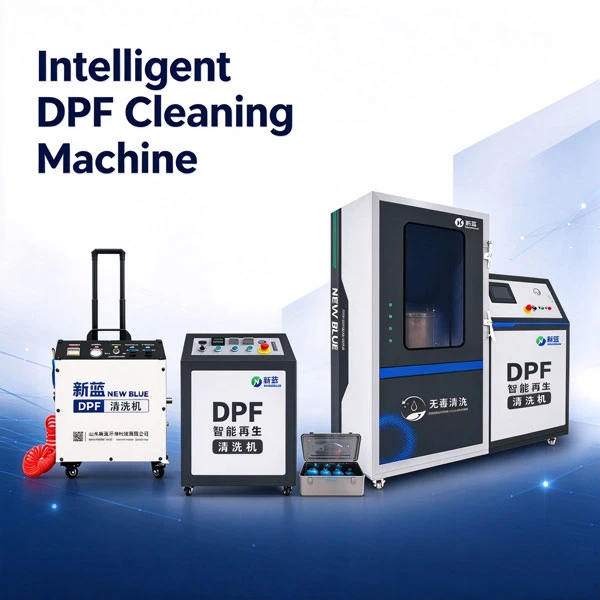
NEWBLUE Intelligent DPF Cleaning Machine
New Blue intelligent DPF cleaning machine works with matched professional regeneration cleaning agents. It adopts pulse and surge cycle cleaning technology to remove soot, ash and oil sludge in DPF pores, with zero damage to the DPF precious metal coating. Featuring six-in-one intelligent design and waste liquid recycling system, it offers eco-friendly, low-cost automatic DPF regeneration for repair shops and fleets.